Short answer: the price of a custom hi vis vest is driven by nine things: the base style, the fabric, the reflective tape, whether it is certified, the logo method and number of colours and positions, pockets and features, the size range, labels and packing, and the order quantity. Quantity and logo set-up affect the unit price most on small orders; fabric, tape and certification affect it most on large ones.
We are often sent two quotes for “the same vest” that look very different. Usually they are not the same vest. Here is what changes the cost when a factory makes custom hi vis vests, so you can compare like with like.
The 9 cost factors
| # | Factor | Lower cost | Higher cost |
|---|---|---|---|
| 1 | Base style | Simple hook-and-loop vest | Surveyor vest with many pockets |
| 2 | Fabric | Light knitted mesh | Heavier solid fabric, two-tone panels |
| 3 | Reflective tape | Economy tape, sewn | High-performance or segmented heat-transfer tape |
| 4 | Certification | Non-certified identification vest | Tested to ANSI/ISEA 107 or EN ISO 20471 |
| 5 | Logo | 1 colour, 1 position | Several colours, several positions, embroidery |
| 6 | Features | No pockets | ID holder, mic tabs, tablet pocket, zipper |
| 7 | Size range | One-size or M–XL | XS–5XL; extended sizes use more material |
| 8 | Labels & packing | Bulk packed | Private labels, hangtags, single polybags |
| 9 | Quantity | Large, single design | Small, many designs or colours |
1–2. Style and fabric
A basic two-band vest uses little fabric and few operations. A surveyor vest with eight pockets, a zipper and contrast binding has many more sewing steps. Solid fabric costs more than light mesh and takes print better; see mesh vs solid custom hi vis vests.
3. Reflective tape
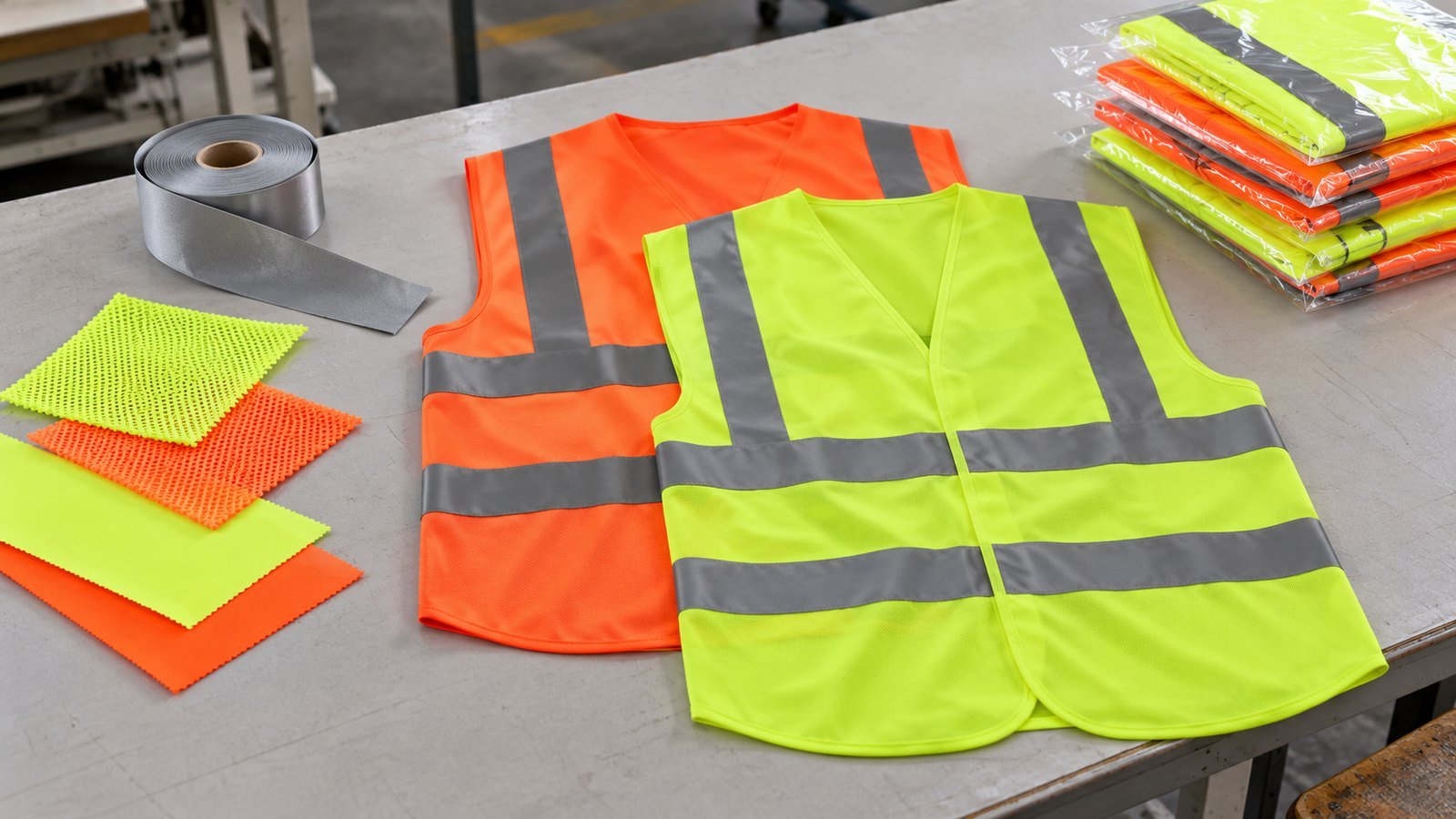
Tape is one of the most expensive materials on a hi-vis vest. Tapes differ in brightness, how many wash cycles they are rated for, and whether they are sewn or heat-applied. Segmented heat-transfer tape is more flexible and breathable but costs more. A cheaper quote often means cheaper tape, so ask what is being used.
4. Certification
Certified vests use tested fabric and tape and a compliant layout, and the testing and certificate are part of the cost. Non-certified vests are cheaper but must not be sold or used as hi-vis PPE. See the standards guide.
5. Logo method, colours and positions
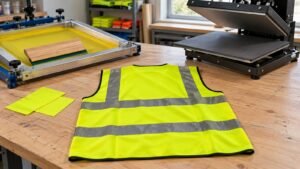
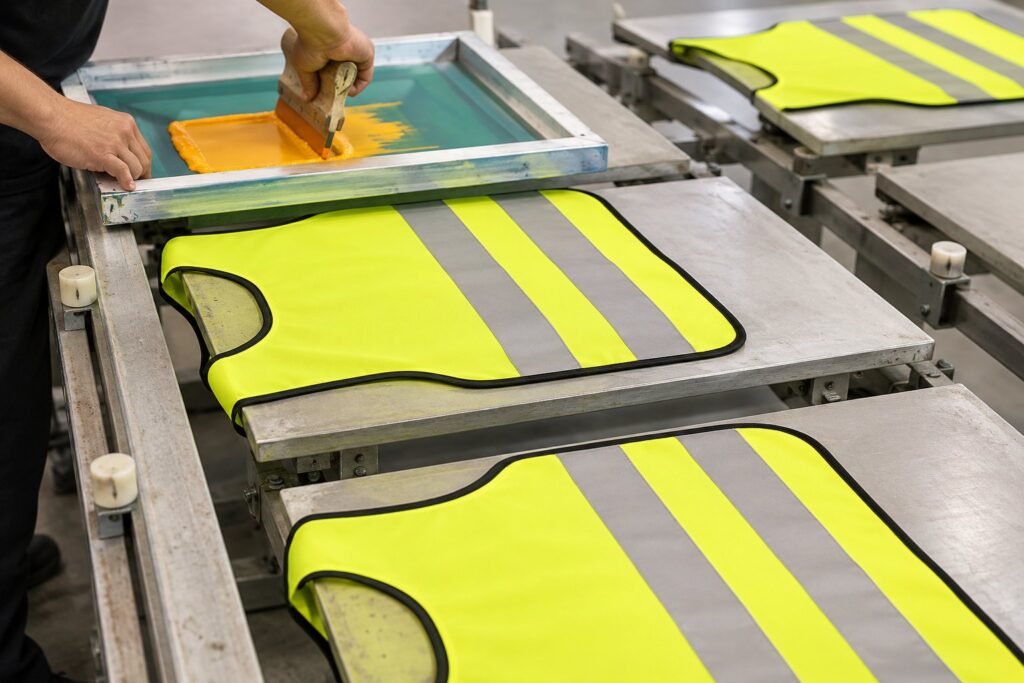
Screen printing has a set-up cost per colour per position, so it is cheap per vest on big runs and expensive on small ones. Heat transfer has a low set-up and suits small orders and detailed logos. Embroidery is priced by stitch count. Each extra logo position adds a handling step. Compare methods in screen print vs heat transfer vs embroidery.
6–8. Features, sizes and packing
Each feature adds material and labour. Extended sizes (3XL–5XL) use more fabric and tape, and a compliant small size may need a different layout. Private labels, hangtags and individual polybags add materials and packing time, but save you repacking at your warehouse.
9. Quantity
Larger orders spread set-up costs and let the factory buy fabric and tape efficiently. Splitting the same quantity across many colours, designs or logo versions reduces that benefit.
Where you can save
- Use one logo design and size across the whole order.
- Keep logo colours to what your brand really needs.
- Drop pockets your crews do not use.
- Consolidate colours and styles into fewer, larger runs.
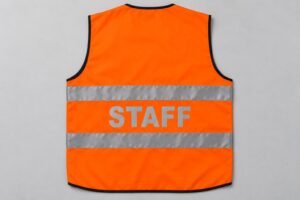
- Choose a non-certified vest only where hi-vis PPE is genuinely not required (events, staff ID).
Where not to save
- Reflective tape and fluorescent fabric on vests used near traffic: they are the safety function.
- The physical sample: it is the cheapest point to catch a wrong colour or a logo that breaks compliance.
- The test report: make sure it matches the vest you are buying.
How to compare quotes
Ask each supplier for the same details: fabric weight and type, tape type and rated wash cycles, standard and class with the report reference, logo method and size, pocket list, size range, packing, Incoterm (for example FOB or DDP) and lead time. Our ordering guide includes a checklist you can send to any factory, including us. Ready for a price? Request a quote.
FAQ
Why is one custom hi vis vest quote much cheaper than another?
Usually because the vests are not the same: lighter fabric, cheaper tape, no certification, fewer logo colours, or a different Incoterm. Compare quotes on the same specification.
Does certification add a lot to the price?
It adds the cost of tested fabric and tape, a compliant layout and the test or certificate. For vests used as PPE it is not optional.
Is it cheaper to order without a logo and print locally?
Sometimes on very small orders, but a local print on a certified vest may affect compliance and is often more expensive per piece than factory decoration on a bulk order.
What is the minimum order for custom hi vis vests?
It depends on the vest and logo method. Tell us your quantity in the quote form and we will confirm the MOQ and the price breaks for your style.
Sources and scope
Based on Yolite’s experience quoting and producing custom hi vis vests. Prices are not published here because they depend on the specification, quantity and exchange rates; request a quote for current pricing.