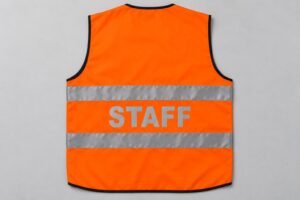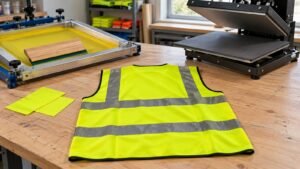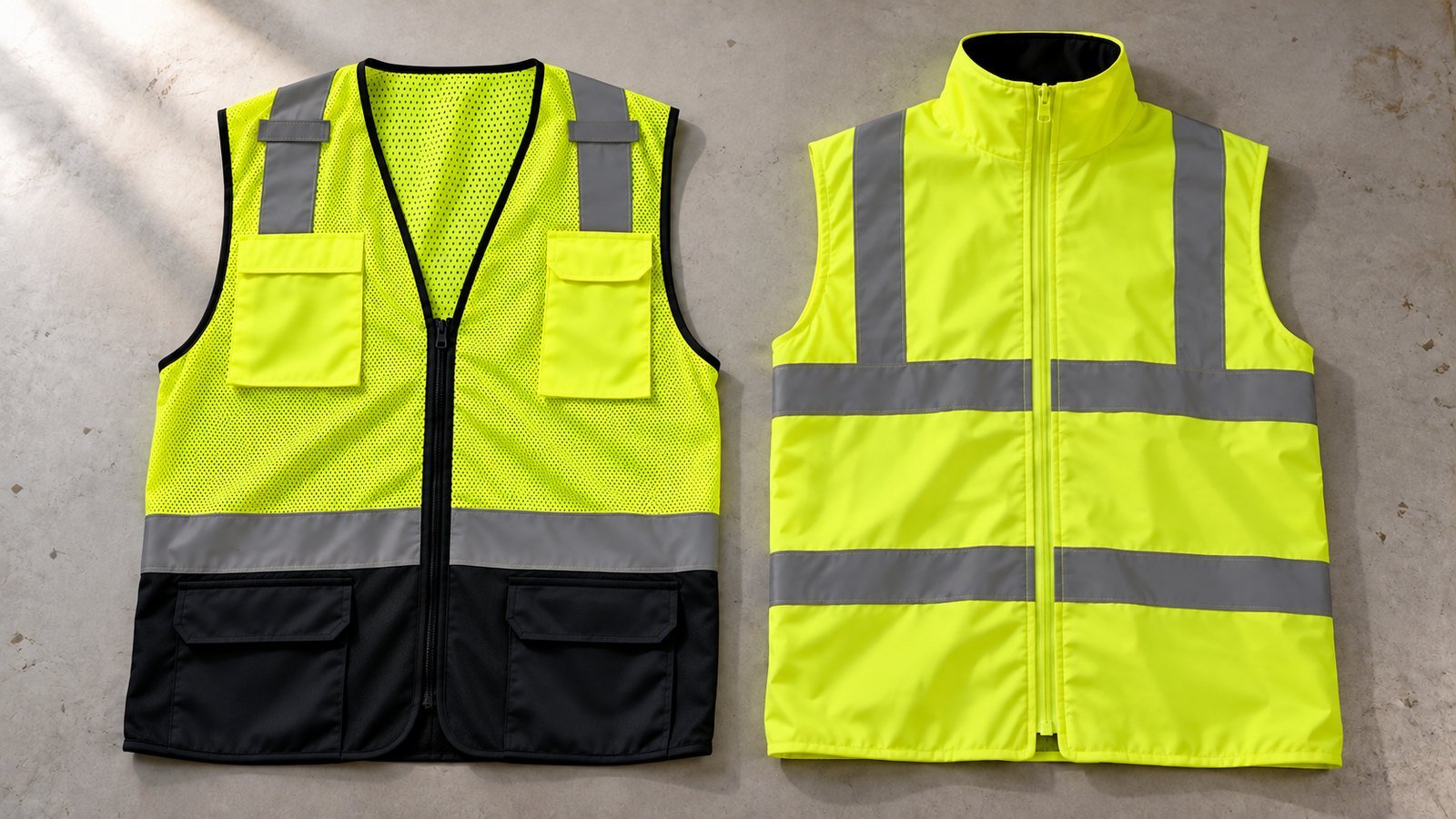
Short answer: choose mesh custom hi vis vests for hot climates and all-day wear, because people keep a cool vest on. Choose solid fabric when the logo matters, the vest takes hard wear, or it is worn in wind and cold. Both can be built to ANSI/ISEA 107-2020 or EN ISO 20471 Class 2. A popular middle way is a mesh body with solid fabric panels for the logo and pockets.
Mesh vs solid compared
| Mesh | Solid fabric | |
|---|---|---|
| Breathability | High | Lower |
| Weight | Light | Heavier |
| Logo print quality | Good for bold designs; fine detail breaks up | Best for detail and every method |
| Snag and tear resistance | Lower (open knit can snag) | Higher |
| Wind and cold | No protection | Some wind protection |
| Look | Sporty, lightweight | Smarter, more uniform-like |
| Can be certified | Yes, Class 2 | Yes, Class 2 |
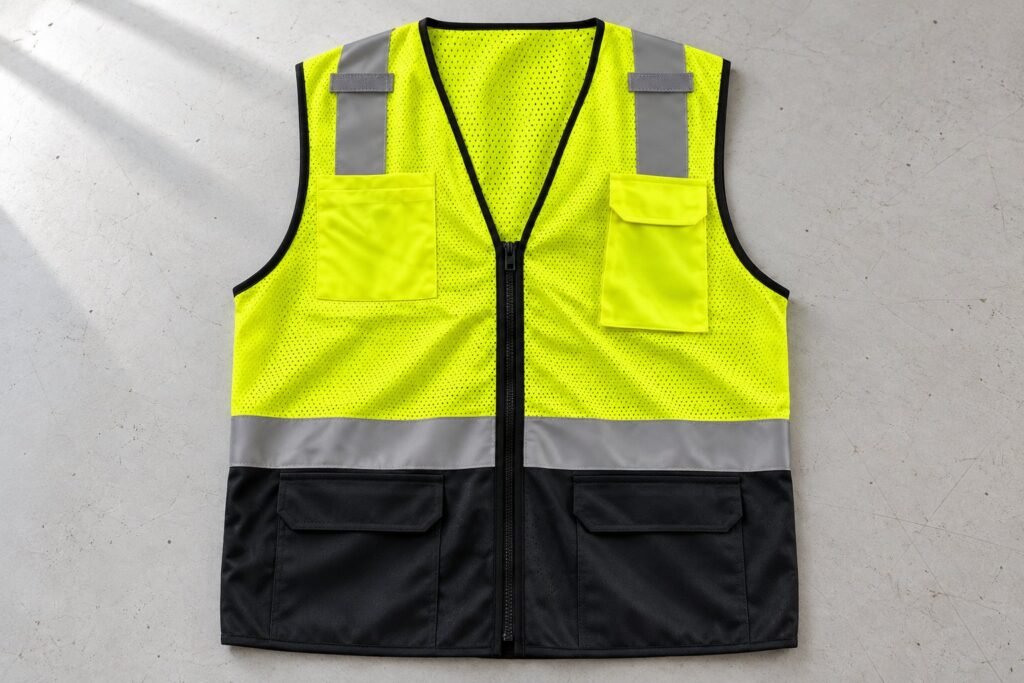
When mesh is the right choice
- Hot or humid climates, summer work and indoor warehouses without air conditioning.
- Vests worn all shift over other clothing: a cooler vest is a vest people actually keep on.
- Lower-cost programmes and visitor vests.
The fluorescent mesh still has to meet the colour and luminance requirements of the standard when tested, and the vest must still meet the background area minimum, so a compliant mesh vest is not just “any neon mesh”.
When solid fabric is better
- Your logo has fine detail, small text or several colours.
- The vest is worn in wind, cold or light rain.
- Work involves rough surfaces, rebar or tools that snag mesh.
- You want a corporate, uniform look, for example for supervisors or client-facing staff.
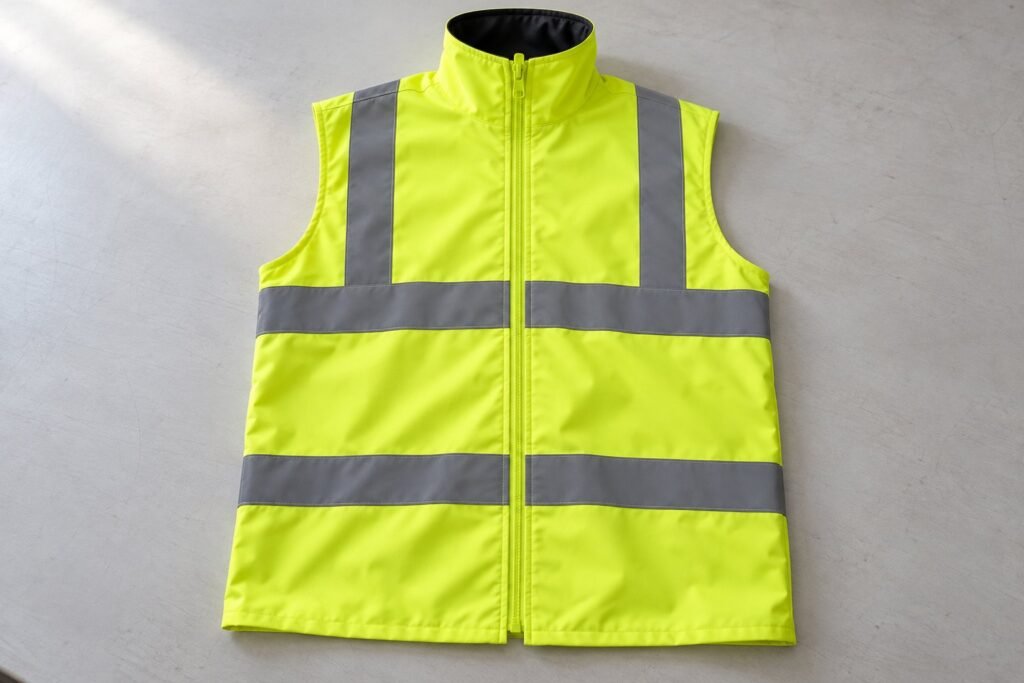
The hybrid option
Many of our custom hi vis vests combine both: a breathable mesh back and sides with a solid front, or a mesh body with solid chest panels, pockets and a solid back yoke where the logo goes. You get most of the comfort of mesh and a clean surface for the logo. See examples on the vest styles page.
Logo tips for each fabric
- Mesh: heat transfer or a sewn patch; bold shapes; avoid fine lines and small text; cut-out designs breathe better than solid blocks.
- Solid: any method; screen printing for volume, embroidery for a premium look, reflective lettering for night ID.
- Both: keep logos off the reflective tape and within the class limits for the smallest size (see logos and compliance).
Still unsure? Send us the climate, the work and your logo, and we will suggest the fabric and show it on a mockup. Request a quote.
FAQ
Are mesh hi vis vests ANSI compliant?
They can be. A mesh vest is compliant if its fluorescent mesh and tape meet ANSI/ISEA 107-2020 and the design meets the area and layout requirements for its class. Check the label for the standard and class.
Do mesh vests last as long as solid vests?
Usually not under hard use, because open mesh can snag and tear. For general site wear with sensible care, mesh vests give good service and are often preferred for comfort.
Can you embroider on a mesh vest?
Direct embroidery can pucker light mesh. We recommend an embroidered patch sewn on, or a solid fabric chest panel for the embroidery.
Which is cheaper, mesh or solid?
Mesh is often slightly cheaper and lighter to ship, but the difference depends on the fabric grade, the tape and the features. See our guide to custom hi vis vest price factors.
Sources and scope
Based on Yolite’s production of mesh and solid custom hi vis vests; compliance references to ANSI/ISEA 107-2020 and EN ISO 20471:2013+A1:2016.