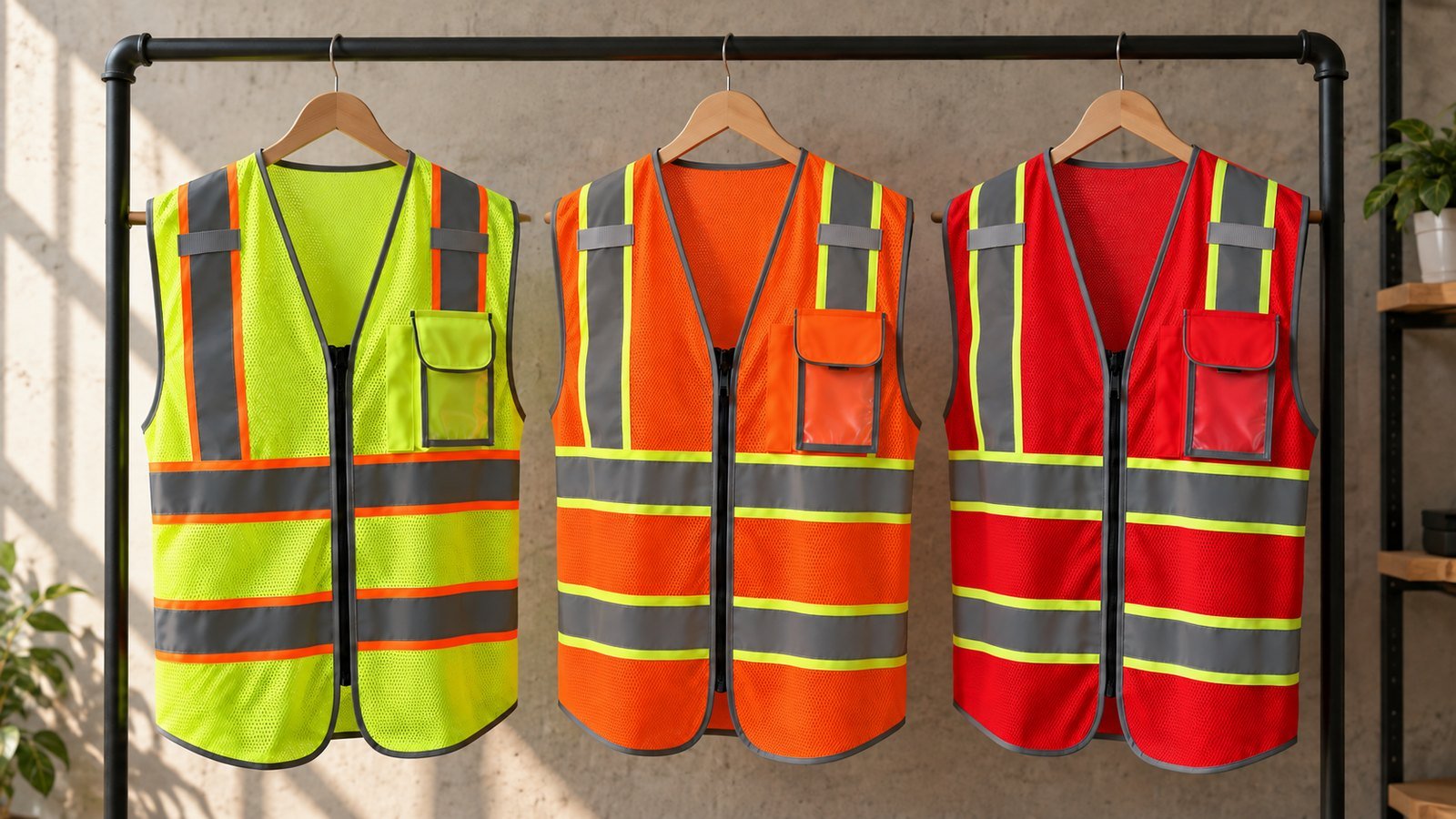
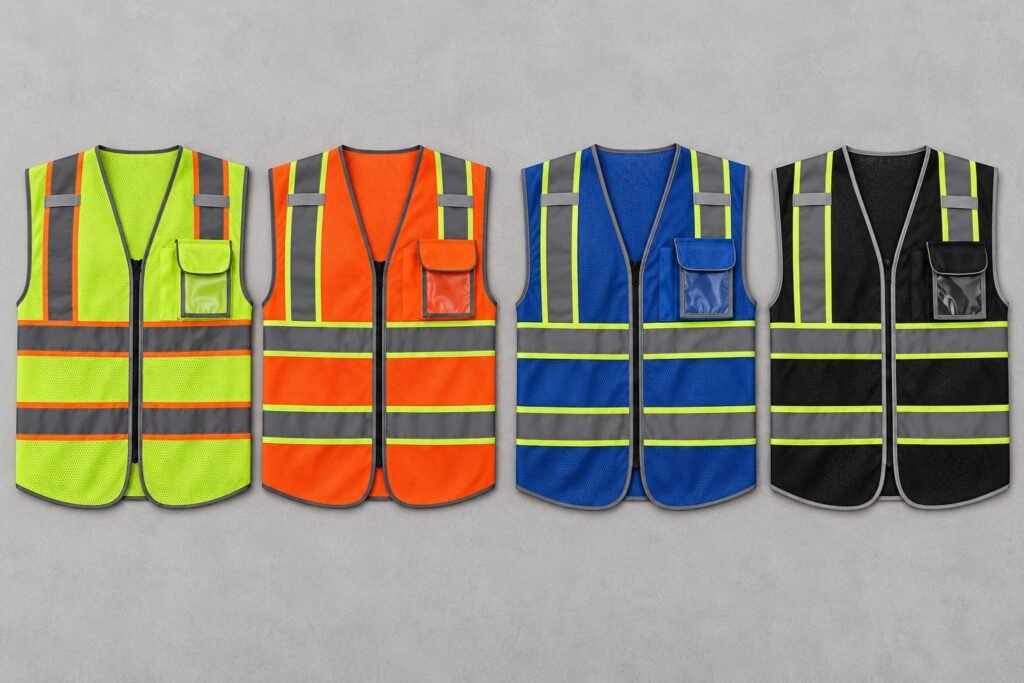
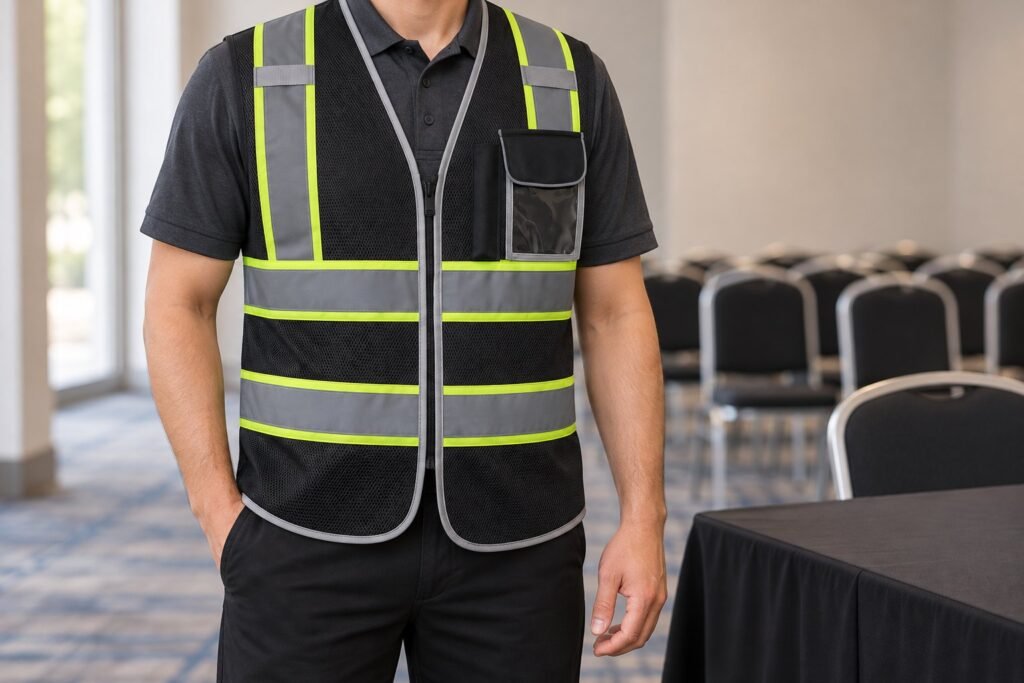
Short answer: only fluorescent colours count as high visibility. ANSI/ISEA 107-2020 accepts fluorescent yellow-green, orange-red and red; EN ISO 20471 accepts fluorescent yellow, orange-red and red. Choose the one that contrasts best with your work environment. Blue, black, green or pink custom vests can carry reflective tape and look good for events and staff ID, but they are not certified hi-vis garments.
Which colours are compliant?
| Colour | ANSI/ISEA 107-2020 | EN ISO 20471 | Typical use |
|---|---|---|---|
| Fluorescent yellow / yellow-green | Yes | Yes | Construction, logistics, general site work |
| Fluorescent orange-red | Yes | Yes | Road work, rail, utilities, wooded or green areas |
| Fluorescent red | Yes | Yes | Less common; some emergency and rail uses |
| Blue, black, green, pink, purple | No | No | Events, volunteers, staff ID (not certified hi-vis) |
The standards define each colour by measured chromaticity and luminance, not by name. A “neon yellow” fabric is only compliant if it has been tested to meet those values, and if it still meets them after the required light-fastness testing.
Yellow, orange or red: how to choose
Pick the colour that stands out most against what is behind your workers:
- Fluorescent yellow is the most widely used and very bright in daylight and at dawn and dusk. It works well in urban, grey and brown environments such as building sites and warehouses.
- Fluorescent orange contrasts strongly with green foliage, grass and snow, and is the traditional road-work and rail colour in many countries. If your crews work on verges, forests or in winter, orange is often better.
- Fluorescent red is compliant but less common; it is used where a red identity is required.
Some sectors and clients set the colour for you, for example rail operators or highway authorities. Check site rules before you choose. If you supply several clients, many distributors stock both yellow and orange versions of the same custom vest.
Using colour to identify roles
Colour is a simple way to separate roles on a busy site while keeping everyone compliant. Common approaches on custom hi vis vests:
- Yellow vest for workers, orange vest for supervisors or traffic marshals.
- Same base colour, different trim colour by role (see our contrast-tape style on the styles page).
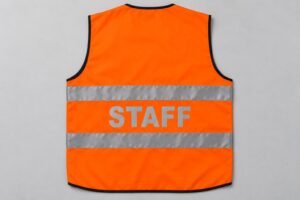
- Same vest, different back lettering: SUPERVISOR, FIRST AIDER, BANKSMAN.
When blue, black or green custom vests are fine
Non-fluorescent vests with reflective tape are popular because they look smarter and show dirt less. They are fine where the goal is identification rather than protection from vehicles: event staff, volunteers, stewards, visitors, retail and hospitality teams. They should not be used where a hi-vis garment is required by a risk assessment or law.
For public, non-professional uses there is also EN 17353:2020, the European standard for enhanced visibility equipment (for example for cyclists, runners or school groups). It is a different standard from EN ISO 20471 and does not replace it at work.
Keeping the colour bright
Fluorescent colours fade with sunlight, washing and dirt. A faded vest can drop below the luminance it was tested at, even if it still looks “yellow”. Wash vests as the care label says, avoid bleach, and replace vests that are faded, torn or have cracked tape. If your vests live outdoors all day, order enough for rotation.
Next: see how the colour choice affects price in what drives the price of custom hi vis vests, or send your colour and logo for a mockup and quote.
FAQ
What is the most visible hi vis vest colour?
Fluorescent yellow-green is the most widely used and very bright in daylight, but the most visible colour is the one that contrasts with your background. Orange often stands out better against green foliage and snow.
Are blue hi vis vests compliant?
No. Blue is not a compliant background colour under ANSI/ISEA 107 or EN ISO 20471. A blue vest with reflective tape is an identification vest, not certified hi-vis.
Can a custom vest mix yellow and orange?
Yes. Two-tone designs and contrast trim are common. On a certified vest, only the compliant fluorescent areas count toward the background minimum.
Does a dark logo reduce visibility?
A logo covers a small area of fluorescent fabric. That is acceptable as long as the visible fluorescent area still meets the class minimum; see our guide on logos and compliance.
Sources and scope
Colour requirements from ANSI/ISEA 107-2020, EN ISO 20471:2013+A1:2016 and EN 17353:2020. Advice on colour choice reflects common industry practice; your site rules or regulator take priority.